Cooling vs warming: how to choose what your body needs
Ice or heat, a cooling rub or a warming one? When each feels best, and why many people end up wanting both.
Cold and warmth have been used on tired bodies for as long as people have had tired bodies. They do different things and feel different, so it helps to know which one you are reaching for and why.
The short version
- Cooling feels best right after activity, in the heat, or when an area feels hot and freshly worked.
- Warming feels best for stiffness, before you move, and at the end of the day.
- A cool-then-warm blend gives you both in one application.
What cooling does
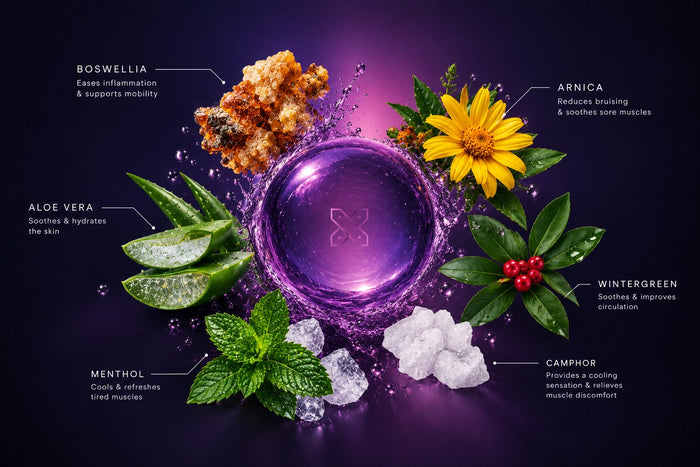
Real cold, like an ice pack, lowers skin and tissue temperature and calms the area down. Cooling actives such as menthol work differently: they trigger the skin's cold receptors so the area feels cool without actually freezing anything. Either way, the cool sensation tends to take the edge off how soreness feels, which is why it is so popular straight after training.
What warming does
Warmth helps muscles feel looser and more comfortable, and encourages blood flow to the area. Warming actives such as camphor and wintergreen create a gentle heat on the skin. It is the feeling people tend to want for stiffness: a tight lower back in the morning, a stiff neck after a day at a desk, cold muscles before a game.
A quick guide
| Situation | Usually feels best |
|---|---|
| Straight after a hard session | Cool |
| Playing in the heat | Cool |
| Morning stiffness | Warm |
| Before a game or workout | Warm |
| Desk-day neck and shoulders | Warm |
| Winding down at night | Cool, then warm |
Why you don't have to choose
A blend of menthol with camphor or wintergreen gives you a cool hit first and a gentle warmth behind it. That two-step feeling covers most everyday situations, which is why it has become the classic recovery rub profile.
This guide is general information, not medical advice. If pain is sharp, severe, follows an injury, or lasts more than a week, see a doctor or physiotherapist.