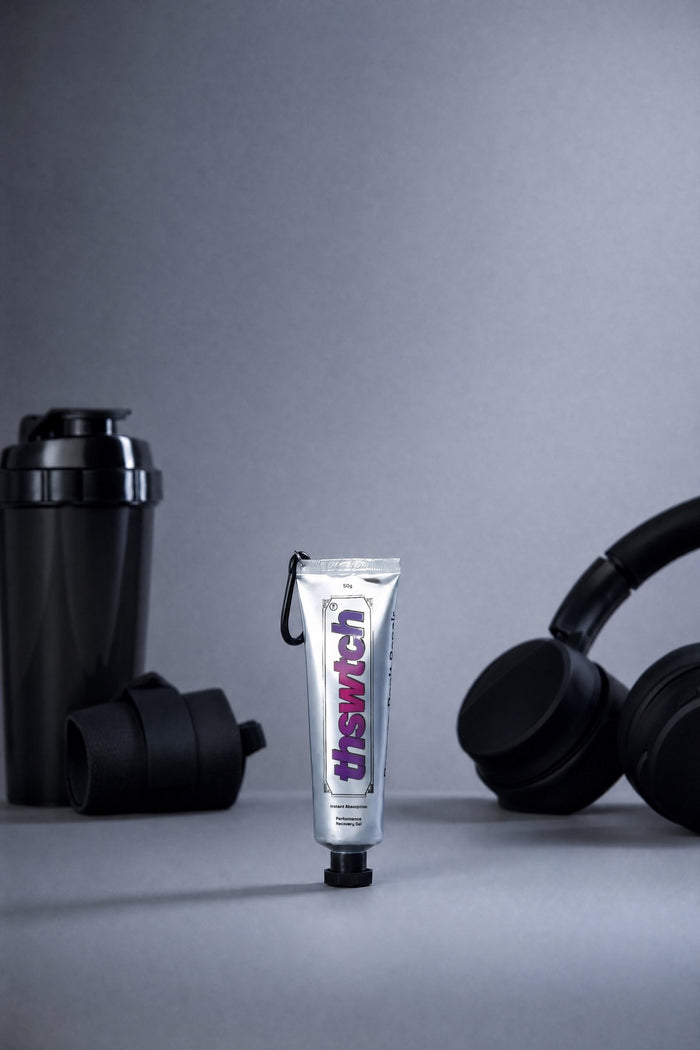
Menthol, camphor and wintergreen: how to read a recovery gel label
Cool, warm, botanical, base. What the most common actives in a recovery gel actually do, and the safety notes worth knowing.
Turn over most recovery gels and you will see a short list of familiar names. Each one has a different job. Once you know them, you can tell in ten seconds what a product will feel like and whether it suits you.
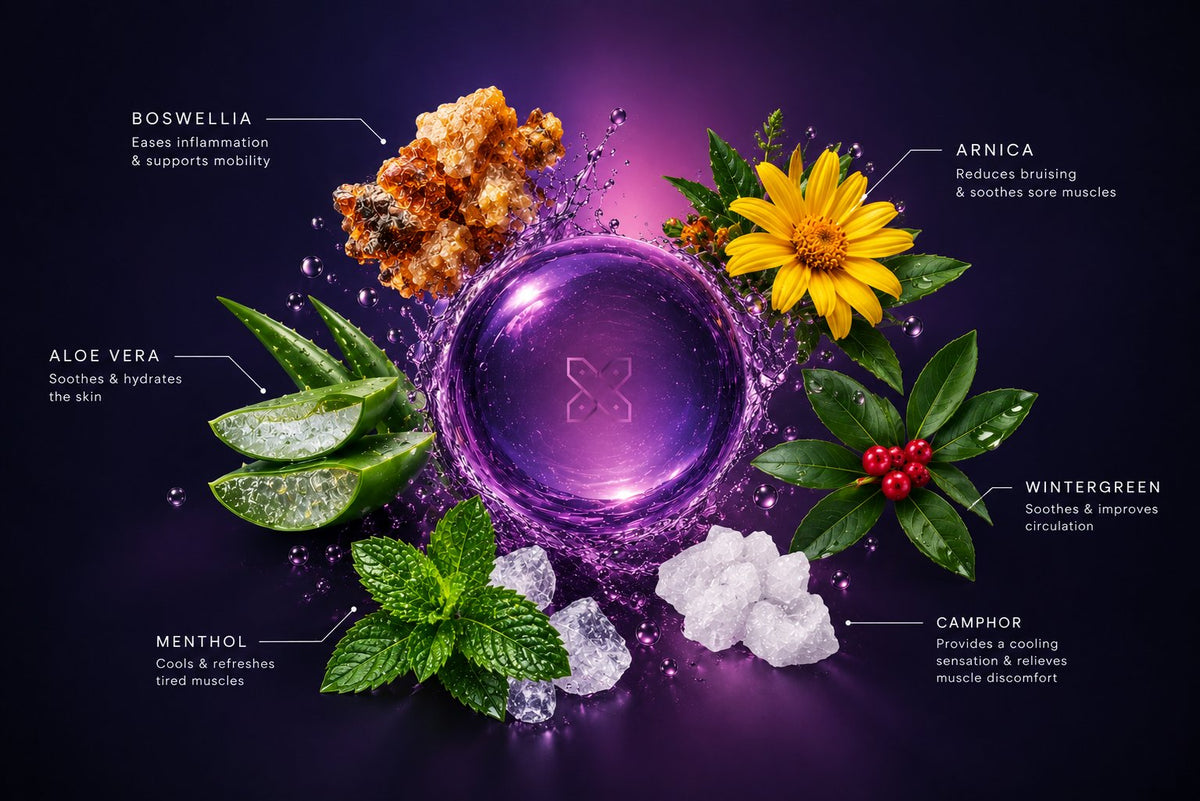
The short version
- Menthol = the cool.
- Camphor and wintergreen = the warm.
- Arnica and boswellia = traditional botanicals.
- Aloe = the base that carries it all and absorbs.
Menthol: the cold signal
Menthol comes from mint. It activates TRPM8, the receptor in your skin that normally fires when something is cold. Nothing is actually being chilled; your nerves are simply getting a "cold" message. That fresh, cooling feeling arrives within seconds and is a big part of why menthol takes the edge off how soreness feels.
Camphor: the gentle warmth
Camphor works on a different set of skin receptors, the ones involved in warmth. It is often described as cooling at first and then warming. In a blend with menthol, it is what gives the cool-then-warm rhythm and the comforting, worked-in feeling afterwards.
Wintergreen: the deeper warm
Wintergreen oil is rich in methyl salicylate, a classic ingredient in muscle rubs. It acts as a counterirritant: a mild, warming sensation on the skin that draws attention away from the ache underneath, and it brings blood flow to the area.
Arnica and boswellia: the traditional botanicals
Arnica is a mountain flower that has been used on tired, bruised muscles for generations. Boswellia is a resin from the frankincense tree, used for centuries in traditional practice and studied for its boswellic acids. Both are there for the long-standing role they play in recovery care.
Aloe: the base
The base decides how a gel feels. Aloe gives a light, water-based texture that spreads easily, sinks in quickly and doesn't leave a greasy film on skin or clothes.
What to look for on the label
- The order. Ingredients are listed from most to least. The first few tell you most of the story.
- Cool, warm, or both. Menthol alone feels cold. Add camphor or wintergreen and you get warmth too.
- Medicated or not. Pain-relief drugs such as diclofenac sit in a different category. Know which one you are buying.
- The base. Gel bases absorb fast. Balms and waxes feel heavier and can mark clothing.
This guide is general information, not medical advice. If pain is sharp, severe, follows an injury, or lasts more than a week, see a doctor or physiotherapist.